London – Day 3 – V&A Storehouse
Tuesday, 27-Jan-2026
Tags: Travel
This was a work day for Larry. Eileen shopped at the Westfield Shopping Center for a sling bag that she forgot to pack. Following that, Eileen walked to the V&A Storehouse East, skirting Queen Elizabeth Olympic Park.
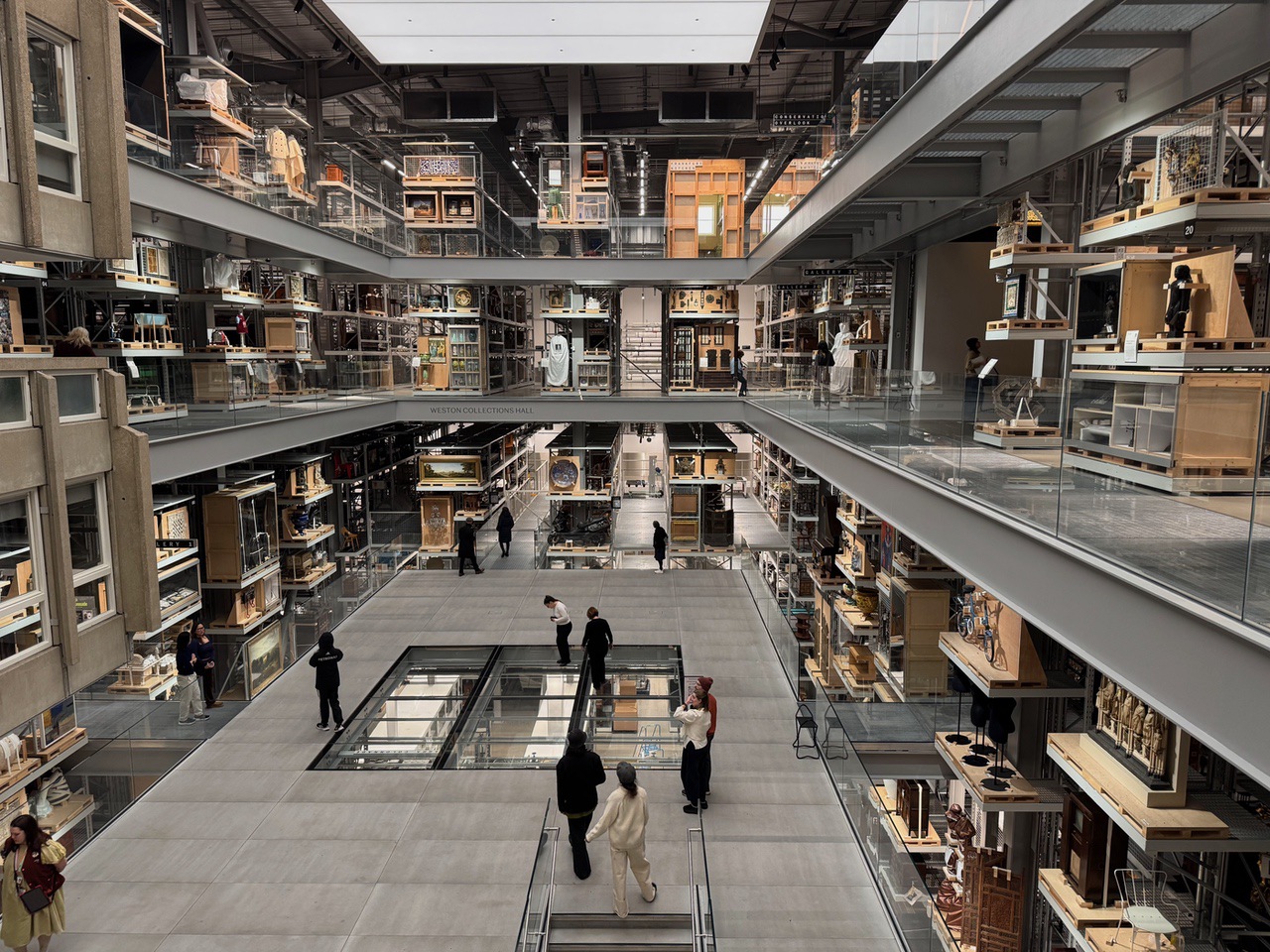
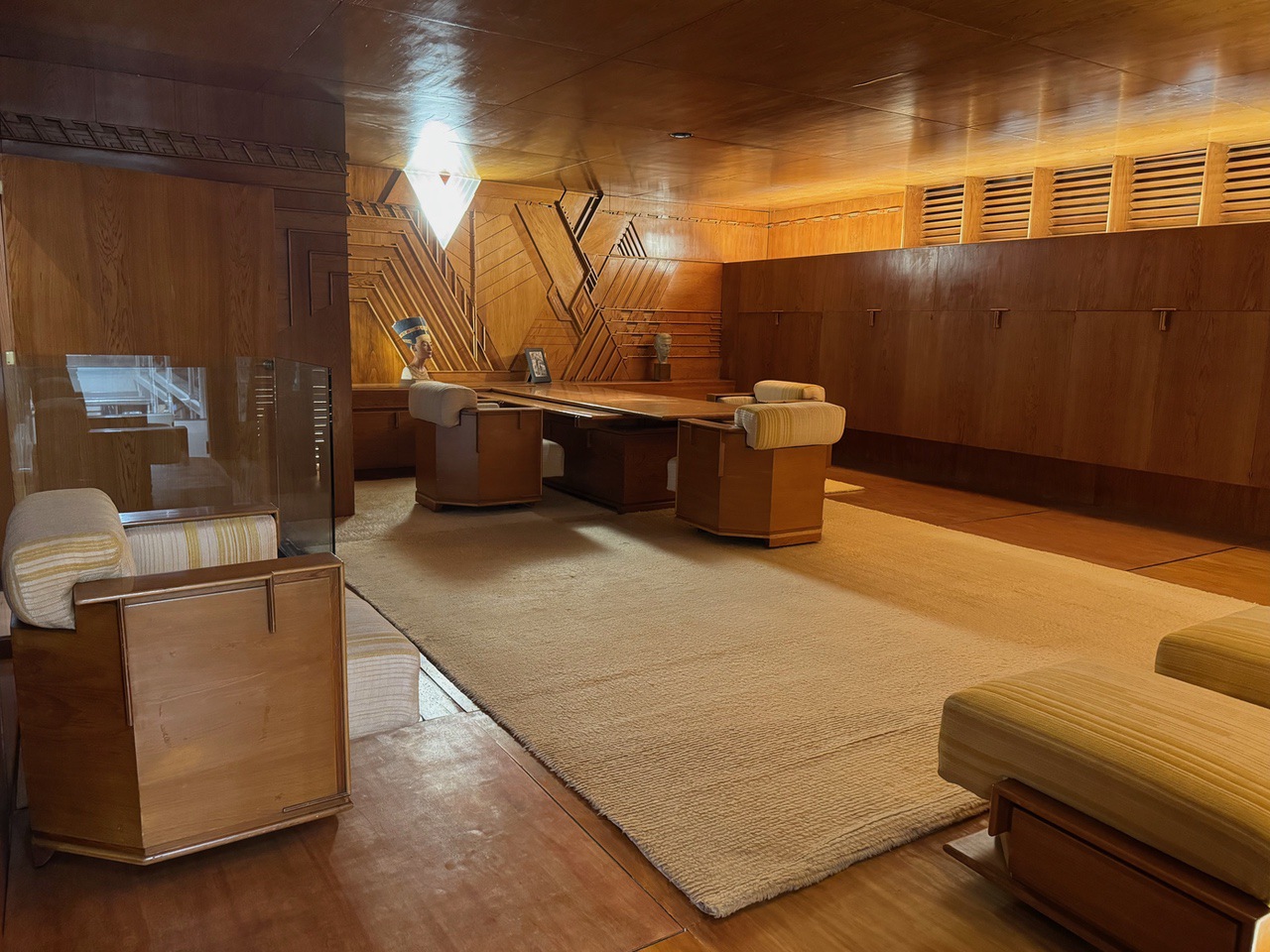
V&A East Storehouse is a new museum space designed to showcase over half a million works from the Victoria and Albert Museum's collection. It is really a storehouse, with objects that are not displayed in the regular V&A museums. It offers visitors a behind-the-scenes experience of how museum objects are collected, cared for, and displayed. There are 3 floors with 20–30 endcaps that the museum has specifically selected, with QR codes to give detailed information about the objects. There are ceramics, paintings, objects from around the world, displays about theater costumes, clothes from around the world, a section on a razed 20th century brutalist (architectural style) community housing project showing sample rooms and audio from the residents, a complete installation of the Frank Lloyd Wright Edgar Kaufmann office donation by Kaufmann’s son, etc. There are sections on how the museum handles its objects, how it restores them, and about a bit of an apology for objects taken from countries that Britain colonized. There is also a David Bowie room, donated by David Bowie himself, which displays some costumes and memorabilia, and copies of his notes that visitors can look at.
Dinner was back at the Hera with a group from Larry’s work.
Some pictures from the V&A East Storehouse.
Picture of the building interior.
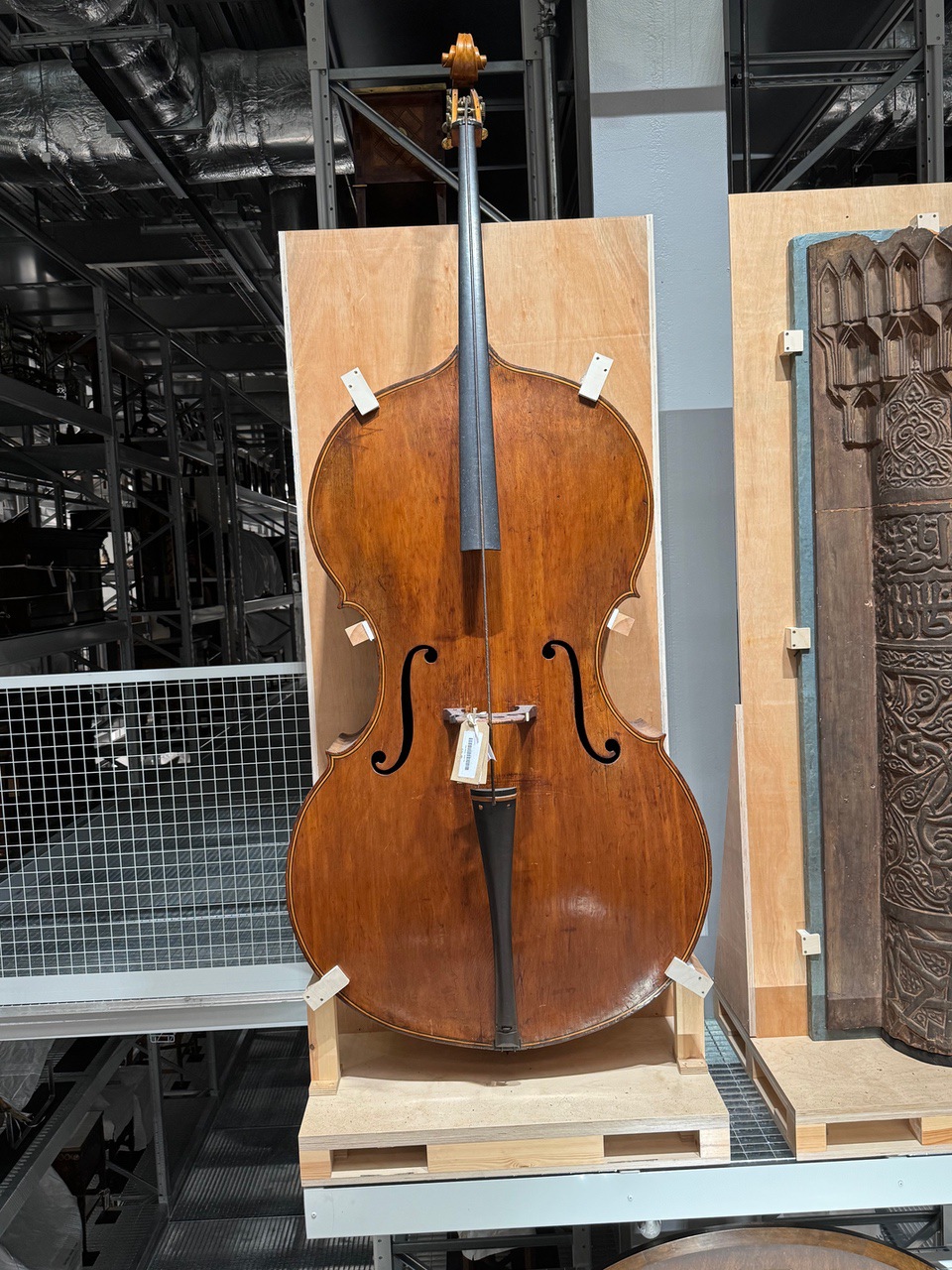
Double Bass – This giant double bass made in 1680 in Italy was owned by Domenico Dragonetti (1763–1846), a flamboyant virtuoso from Venice, who settled in England in 1794.
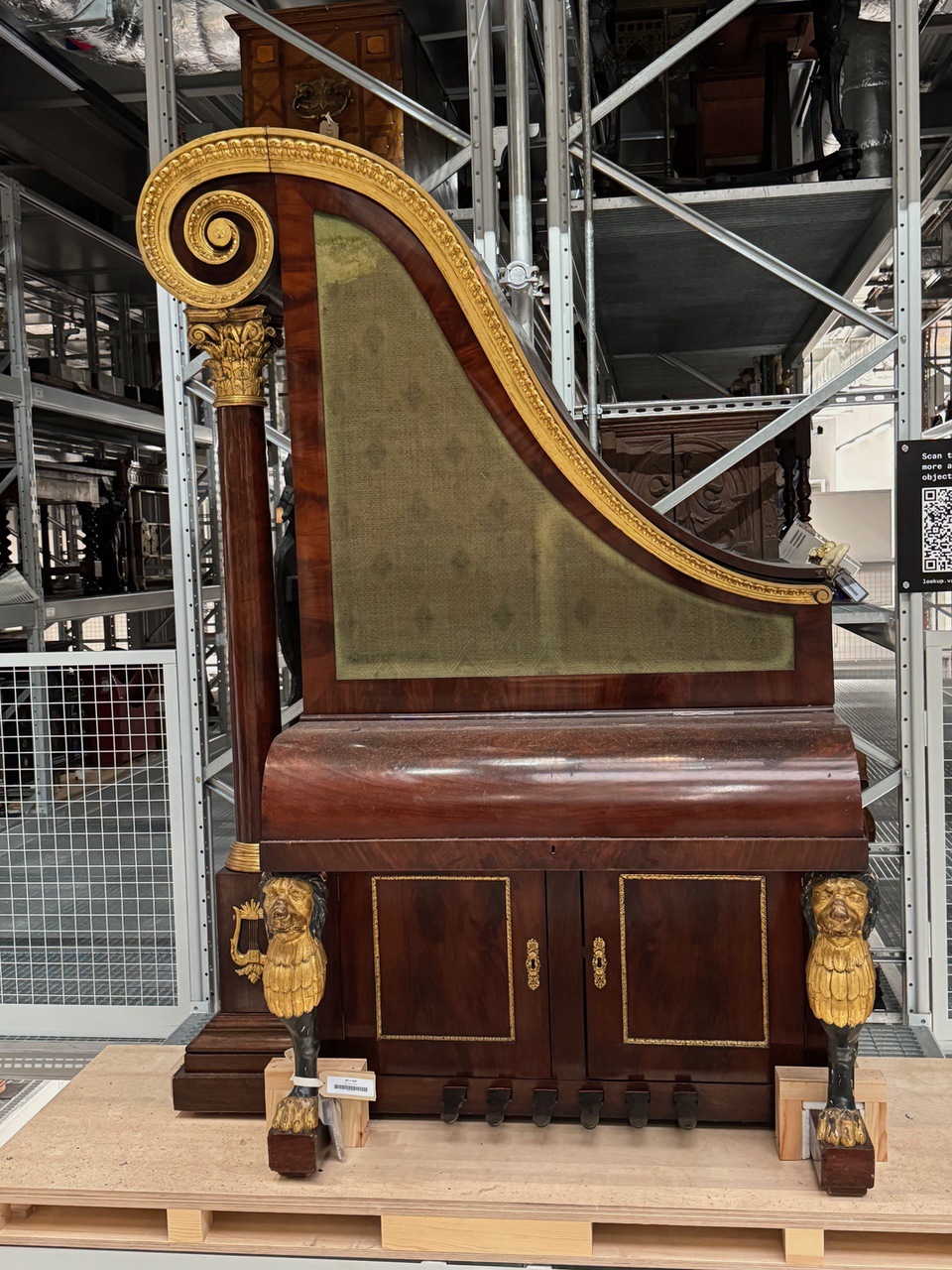
Piano – This instrument was made in about 1820 by Corneille Van der Does (1769–1827), a piano-maker from Amsterdam. Owing to the shape of its case, this type of piano was known as a 'giraffe piano'. Like pianos being made in Vienna from about 1800, this example is fitted with a number of pedals, which, when depressed, could activate special musical effects such as drums and bells. It was used in popular arrangements of martial music. This instrument was the property of Sir William Quiller Orchardson R.A. (1832 - 1910), an eminent Scottish painter, who included it in two of his pictures.
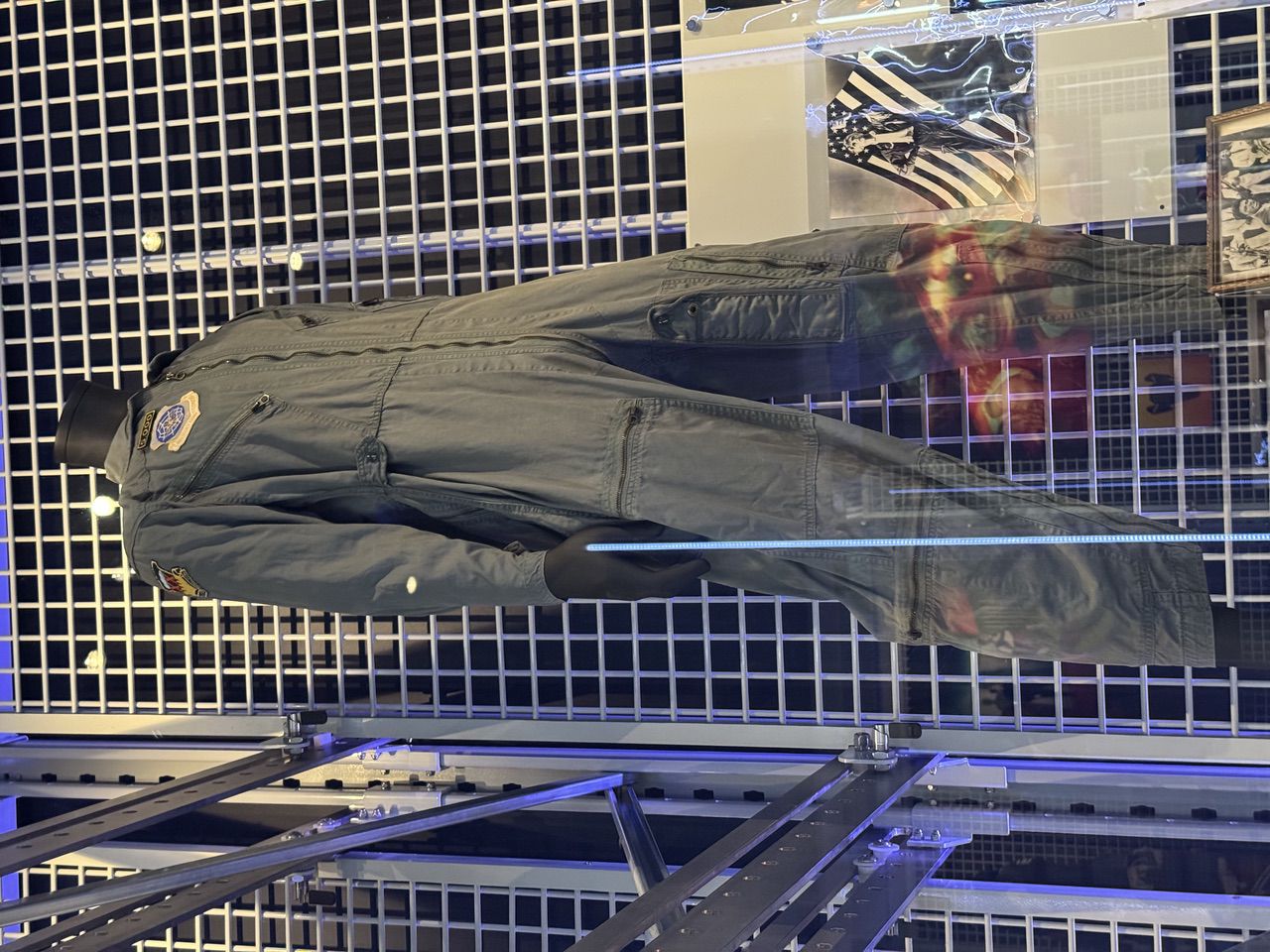
David Bowie costume – One of the costumes on display in the David Bowie Center.
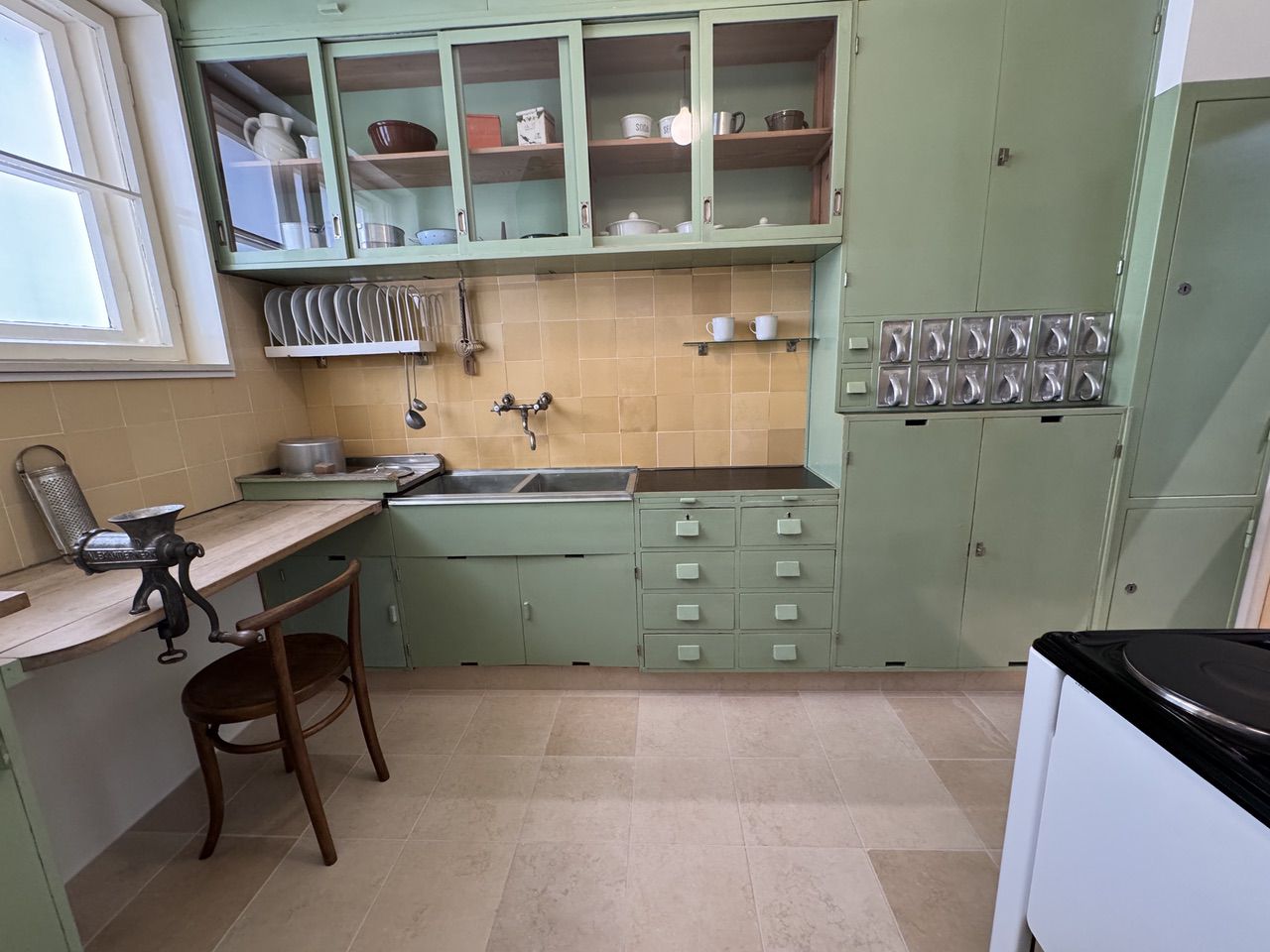
Frankfurt Kitchen – Architect Margarete Schütte-Lihotzky revolutionised housework with this fitted kitchen, 10,000 of which were installed across housing projects in Frankfurt, Germany, 1926–1927.
Kaufmann Office – Constructed in 1935–1937, made from cypress plywood, this office is the only complete interior designed by architect Frank Lloyd Wright on permanent display outside the USA. Pittsburgh retail magnate Edgar J Kaufmann Sr. commissioned Wright to design this room for a Kaufmann’s department store. He was persuaded to adopt the architect’s modern style by his son, who had spent six months as Wright’s apprentice. Edgar Kaufmann Jr. donated the office to the V&A in 1974 after his father’s death, believing that ‘Wright’s work could not have found a safer or a more suitable haven.’
Other posts that refer to this post:
--
Larry and Eileen Samberg